
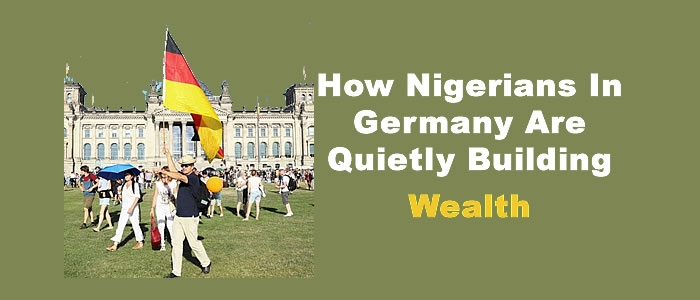
Germany has emerged as one of the most appealing spots in Europe for skilled professionals, international students, entrepreneurs, and those eager to carve out long-term career and financial paths. Over the last ten years, a significant number of Nigerians have made the move to Germany, drawn by the promise of higher education, specialized job opportunities, and business prospects, all thanks to the country’s robust economy, top-notch infrastructure, and stable financial environment.
While the public often zeroes in on topics like relocation, visas, and job openings, there’s a quieter narrative developing behind the scenes. Many in the Nigerian diaspora are steadily building their financial futures through disciplined saving, ongoing education, smart career decisions, investing, and entrepreneurship. Instead of chasing quick financial gains, they’re focusing on long-term wealth-building strategies that grow over time.
It’s essential to recognize that experiences can differ greatly. Nigerians in Germany come from a wide range of educational, professional, and financial backgrounds, meaning not everyone has access to the same opportunities or achieves identical results. However, there are certain financial habits and practical strategies that many successful individuals, regardless of their nationality, tend to share.
Germany’s financial landscape provides access to affordable investment options, regulated financial institutions, comprehensive social protections, and a well-developed labor market. When paired with financial discipline and long-term planning, these benefits can lay a strong groundwork for wealth accumulation in Germany.
In this article, we’ll delve into the practical methods many Nigerians are using to establish long-term financial stability. We’ll look at career paths, investing in Germany, saving strategies, entrepreneurship, financial planning, and the habits that foster sustainable wealth creation. We’ll also tackle common challenges, realistic solutions, and valuable lessons that anyone—whether already in Germany or considering a move—can apply to their journey.
Why Germany Provides Strong Wealth-Building Opportunities
Building wealth requires more than earning a high income. It depends on access to opportunities, a stable economic environment, disciplined money management, and the ability to invest consistently over many years. Germany offers several advantages that support these goals.
A Stable and Resilient Economy
Germany has one of the largest economies in Europe and is widely recognised for its industrial strength, innovation, and export-driven growth. Although every economy experiences cycles of growth and slowdown, Germany has historically maintained strong institutions, transparent regulations, and a stable financial system.
This stability creates an environment where individuals can plan their finances with greater confidence.
Strong Demand for Skilled Professionals
Many Nigerians relocate to Germany through employment or higher education, eventually finding opportunities in sectors facing skilled labour shortages.
These industries include:
- Information Technology
- Software Engineering
- Healthcare
- Nursing
- Mechanical and Electrical Engineering
- Renewable Energy
- Manufacturing
- Finance and Accounting
- Logistics
- Skilled Trades
Competitive salaries in these sectors can make it easier to save and invest, particularly for individuals who maintain disciplined spending habits.
Access to European Financial Markets
Unlike many developing economies, Germany provides easy access to regulated investment products including:
- Exchange-Traded Funds (ETFs)
- Individual shares
- Government and corporate bonds
- Pension products
- Real estate investment opportunities
Modern digital investment platforms have also reduced barriers to entry, allowing investors to begin with relatively small amounts.
Strong Social Security System
Germany's social security framework—including healthcare, unemployment insurance, and pension contributions—helps reduce certain financial risks. While this does not eliminate the need for personal savings, it allows many residents to focus more confidently on long-term financial planning.
How Nigerians in Germany Are Quietly Building Wealth
Although individual journeys differ, several wealth-building patterns are commonly observed among financially successful immigrants.
Education and High-Income Careers
For many Nigerians, education serves as the foundation for long-term financial growth.
International students often pursue degrees in engineering, computer science, healthcare, business, or other in-demand disciplines before transitioning into skilled employment.
Continuous professional development also plays an important role. Many professionals invest in:
- German language proficiency
- Professional certifications
- Technical skills
- Leadership training
- Industry-specific qualifications
Higher skills often translate into greater earning potential over time.
Rather than viewing education as an expense, many see it as an investment that generates returns throughout their careers.
Living Below Their Means
One of the least discussed but most effective wealth-building strategies is maintaining a lifestyle that costs less than one's income.
Many financially disciplined individuals avoid unnecessary lifestyle inflation even after receiving salary increases.
Instead, they prioritise:
- Monthly budgeting
- Tracking expenses
- Avoiding unnecessary consumer debt
- Saving a fixed percentage of income
- Delaying luxury purchases
Small financial decisions made consistently often produce greater long-term results than occasional large savings.
Investing Early
An increasing number of Nigerians are exploring investing in Germany as part of their long-term financial plans.
Rather than attempting to predict market movements, many focus on consistent investing.
Popular investment choices include:
ETFs Germany
Exchange-Traded Funds (ETFs) have become especially popular because they provide instant diversification across many companies while generally charging relatively low management fees.
Regular monthly investments into globally diversified ETFs allow investors to benefit from long-term market growth without selecting individual stocks.
Stock Market Germany
Some investors also purchase individual shares in companies listed on German, European, or international stock exchanges.
While stock investing carries greater risk than diversified funds, experienced investors may include selected shares as part of a balanced portfolio.
Long-Term Investing
Perhaps the most important lesson is patience.
Many successful investors focus on:
- Investing consistently
- Ignoring short-term market volatility
- Allowing compound growth to work over many years
This long-term approach often reduces emotional decision-making.
Property Investment
Real estate remains an important part of many wealth-building plans.
Some Nigerians eventually purchase homes in Germany after establishing stable careers.
Others invest in rental properties where financially appropriate.
Property ownership can provide:
- Long-term appreciation potential
- Rental income
- Greater financial stability
Some individuals also diversify by investing in carefully researched property projects in Nigeria.
However, successful investors usually avoid concentrating all their wealth in a single country or asset class.
Diversification remains an important risk-management principle.
Entrepreneurship in Germany
Employment is not the only route to financial independence.
Many members of the Nigerian diaspora establish businesses alongside their regular careers.
Examples include:
- Consulting services
- Import and export businesses
- African food retail
- Logistics
- E-commerce
- Professional services
- Digital marketing agencies
- Software development
- Online education
Germany's large consumer market and strong infrastructure create opportunities for innovative entrepreneurs willing to solve real problems.
Building Multiple Income Streams
Many financially successful individuals avoid relying solely on one salary.
Instead, they gradually develop additional income sources.
Examples include:
- Freelancing
- Dividend investing
- Rental income
- Online businesses
- Digital content creation
- Affiliate marketing
- Consulting
- Coaching
- Remote work
Multiple income streams can improve financial resilience, particularly during economic uncertainty.
Financial Habits That Support Wealth Creation
While investment products receive significant attention, daily financial habits often determine long-term success.
Budgeting
A realistic budget helps individuals understand:
- Income
- Fixed expenses
- Variable spending
- Savings goals
Budgeting also reduces unnecessary spending.
Emergency Funds
Unexpected expenses can occur at any time.
Maintaining an emergency fund covering several months of essential expenses reduces reliance on expensive borrowing during financial emergencies.
Avoiding Unnecessary Debt
Debt is not always harmful.
For example, mortgages or business loans may support long-term wealth creation.
However, excessive consumer debt for depreciating assets can limit future investment opportunities.
Investing Consistently
Rather than waiting for the "perfect" time to invest, many experienced investors contribute fixed amounts regularly.
This disciplined approach reduces the temptation to react emotionally to market fluctuations.
Continuous Learning
Financial literacy is an ongoing process.
Many successful investors regularly learn about:
- Personal finance
- Tax planning
- Investment principles
- Business management
- Economic trends
Knowledge often improves financial decision-making.
Long-Term Thinking
Building wealth rarely happens overnight.
Instead, it usually results from years of disciplined decisions, continuous learning, and consistent investing.
Common Challenges Nigerians Face in Germany
Although Germany offers many opportunities, financial success is not guaranteed.
Several challenges commonly affect immigrants.
Cost of Living
Housing costs in major cities such as Berlin, Munich, Frankfurt, and Hamburg can consume a significant portion of income.
Practical strategies include:
- Sharing accommodation initially
- Choosing affordable locations where practical
- Budgeting carefully
Taxation
Germany has a comprehensive tax system.
Understanding income tax, social contributions, and investment taxation helps improve financial planning.
Seeking advice from qualified tax professionals can be valuable for complex situations.
Language Barriers
Although many international companies operate in English, German language skills often improve employment opportunities and career progression.
Investing in language learning frequently produces long-term financial benefits.
Immigration Regulations
Visa requirements, residency rules, and employment conditions may influence financial planning.
Keeping immigration documents current and understanding applicable regulations reduces uncertainty.
Supporting Family Abroad
Many Nigerians provide financial assistance to relatives in Nigeria.
While supporting loved ones is an important cultural value, balancing these commitments with personal savings and investing is essential for long-term financial security.
Limited Investment Knowledge
Some newcomers may have limited exposure to investing before relocating.
Fortunately, Germany offers increasing access to educational resources, books, podcasts, financial courses, and regulated investment platforms that support informed decision-making.
Investment Opportunities Available in Germany
Germany provides a wide range of regulated investment opportunities suitable for different financial goals and risk tolerances.
ETFs
ETFs remain one of the most popular investment products due to their:
- Diversification
- Low costs
- Simplicity
- Long-term suitability
Stock Market Germany
Individual shares allow investors to participate in the growth of companies.
However, stock prices fluctuate, making diversification important.
Pension Schemes
Employer pension programmes and private retirement products can complement Germany's public pension system.
Retirement planning should ideally begin early to maximise long-term growth.
Real Estate Investment Germany
Property ownership can contribute to wealth creation through rental income and long-term capital appreciation.
Prospective buyers should carefully evaluate financing costs, maintenance expenses, taxes, and local market conditions.
Business Ownership
Entrepreneurship remains an important pathway for individuals with strong business ideas and a willingness to manage business risks.
Government-Backed Savings Options
Germany also offers various regulated savings products that may suit conservative investors seeking lower-risk options.
Digital Investment Platforms
Modern investment apps have simplified investing by providing access to diversified portfolios, ETF savings plans, and stock markets from mobile devices.
Regardless of the platform chosen, investors should understand fees, risks, and investment objectives before committing funds.
Lessons Others Can Learn
Whether living in Germany or elsewhere, several practical lessons emerge from the experiences of many financially successful immigrants.
Start Early
Time is one of the greatest advantages in investing.
Even modest contributions made consistently over many years can benefit from compound growth.
Invest in Skills
Increasing earning potential often provides greater long-term returns than focusing exclusively on reducing expenses.
Live Below Your Means
Financial independence usually depends more on saving and investing habits than on income alone.
Diversify Income Sources
Multiple income streams improve resilience during uncertain economic periods.
Build Financial Discipline
Successful wealth creation typically reflects consistent habits rather than occasional financial breakthroughs.
Keep Learning
Economic conditions change.
Investors who continue improving their financial knowledge are generally better equipped to adapt.
Future Outlook
Germany's economy continues to evolve alongside technological innovation, demographic change, and digital transformation.
Several long-term trends may create additional opportunities for the Nigerian diaspora.
Technology and AI
Artificial intelligence, cloud computing, cybersecurity, and software development continue to generate demand for highly skilled professionals.
Individuals who invest in these skills may benefit from expanding career opportunities.
Entrepreneurship
Digital businesses require lower start-up costs than many traditional enterprises.
Remote work also allows professionals to serve international clients while living in Germany.
Sustainable Investing
Interest in environmentally and socially responsible investing continues to grow, providing additional options for long-term investors.
Continued Financial Education
As financial literacy improves, more individuals are expected to participate in regulated investment markets, contributing to broader financial inclusion and long-term wealth creation.
Conclusion: For many Nigerians living in Germany, building wealth isn’t about taking shortcuts or chasing quick gains. It’s more about putting in consistent effort, developing a solid career path, managing money wisely, planning finances thoughtfully, and committing to long-term investments.
Whether it’s through education, securing skilled jobs, starting a business, saving money in Germany, investing in ETFs, getting involved in the stock market, buying property, or creating various income streams, the journey to sustainable wealth is usually a slow and steady one, not something that happens overnight. There are real challenges to face, like taxes, housing expenses, language barriers, and the responsibility of supporting family back home, and these shouldn’t be overlooked. Yet, with careful planning, a commitment to continuous learning, and disciplined financial habits, it’s possible to navigate these hurdles effectively.
The most important takeaway is that financial independence is achieved step by step. Each budget you create, every new skill you acquire, each investment you make, and every smart financial choice you take all play a part in building a brighter financial future. For Nigerians already living in Germany—and for those considering making Germany their new home—the opportunities for long-term wealth building exist, but they are most effectively realised through patience, informed decision-making, and consistent action. Wealth is rarely created overnight, but with persistence and sound financial habits, it can be built steadily over time.






 How To Turn Income Into Assets
  10 Things You Should Stop Buying If You Want To Build Wealth
  Why One Income Stream Can Be Risky
  How To Develop Financial Discipline