
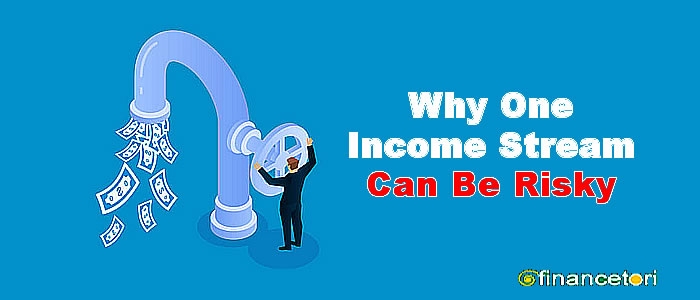
Why One Income Stream Can Be Vulnerable For many people, one salary is the foundation of their entire financial life.
One Income Stream Risk is a practical household concern, not merely a theory. The Risks of Having One Income Stream include reduced flexibility when expenses or circumstances change. This vulnerability helps explain Why You Need Multiple Income Streams: Multiple Sources of Income can support steadier cash flow and greater Financial Security.
It pays the rent, buys food, covers transportation, supports children, pays school fees, handles debt repayments and provides money for emergencies. For an employee, that income may come from one employer. For a freelancer, it could come primarily from one major client. For an entrepreneur, it may come from one business, product or customer.
Having one income stream is not automatically bad or irresponsible. Millions of people successfully manage their finances with one primary source of income.
The vulnerability appears when almost every financial obligation depends on that one source continuing without interruption.
Imagine someone whose entire household depends on one salary. If the job is lost, the problem is not simply the loss of monthly income. Rent, food, transport, education, debt payments and other obligations may continue even though the income has stopped.
The same principle applies to business owners. An entrepreneur may appear to have multiple customers but still be highly dependent on one major customer. If that customer leaves, the business could experience a serious decline in revenue.
This is why understanding income diversification matters.
The goal is not to collect as many income streams as possible. The goal is to build financial resilience—the ability to continue meeting important financial obligations when circumstances change.
A strong financial system can combine a reliable primary income, appropriate savings, valuable skills, manageable expenses and carefully developed additional income sources.
1. What Is an Income Stream?
An income stream is a source from which money regularly or periodically comes into your financial life.
Common examples include:
- Salary from employment
- Business income
- Freelance income
- Consulting fees
- Commission income
- Rental income
- Royalties
- Digital-product income
- Part-time employment
- Professional services
- Dividends or other investment-related income
Income sources can broadly be grouped into different categories.
Earned Income
Earned income is money received in exchange for your labour, time or professional expertise.
Examples include salaries, wages, freelance fees and consulting payments.
Business Income
Business income comes from selling products or services through a business.
A business owner's income can fluctuate significantly depending on sales, customers, costs and market conditions.
Investment-Related Income
Some assets may generate income, such as dividends, rent or interest, depending on the investment and its terms.
However, investment income is not automatically guaranteed. Investments can lose value, income can change and different products carry different levels of risk.
The important lesson is that different income sources have different risks.
Having several sources does not automatically make someone financially secure. The quality, reliability, sustainability and risks of those sources matter.
2. The Risks of Depending on One Income Source
The Benefits of Multiple Income Streams can include flexibility, continuity and more room to save. How to Diversify Your Income starts with matching realistic opportunities to your skills, time and resources. Income Stream Diversification works best when the sources do not all depend on the same employer, client or market conditions.
Financial Independence is a long-term outcome supported by disciplined saving, investing and diversified earnings. How to Increase Your Income and How to Earn Multiple Income Streams are questions best answered gradually: test each option before expanding it. A Second Source of Income can provide breathing room when a primary source slows, while Income Sources for Financial Freedom should be chosen for sustainability rather than short-term excitement.
Employment Risk
Employees can face redundancy, restructuring, organisational changes or changes in employment conditions.
Even a strong employee can be affected by circumstances beyond their control.
If the salary is the only source of household income and there are no meaningful financial reserves, an interruption can quickly create financial pressure.
Employer Risk
A person may have a good career but still depend heavily on one organisation.
If the employer experiences financial difficulties, restructuring or major operational changes, the employee's income may be affected.
Industry Risk
Entire industries can experience disruption.
Technology, regulation, changing consumer behaviour, economic conditions and new competitors can alter demand for particular jobs and services.
This makes continuous learning important.
Business Risk
Entrepreneurs face a different type of income concentration.
A business may depend on:
- One major customer
- One product
- One location
- One supplier
- One sales channel
- One market
If any of these becomes unavailable, revenue may decline.
Client Concentration Risk
Freelancers and consultants should pay particular attention to client concentration.
If most of your income comes from one client, you may technically be self-employed while still being financially dependent on one source.
Losing that client could have an effect similar to losing a job.
Economic Risk
Economic conditions can affect employment, consumer spending, business revenue and purchasing power.
When income depends entirely on one source, there may be fewer alternatives when that source becomes weaker.
Inflation and Purchasing-Power Risk
Earning the same amount while the cost of important goods and services rises can reduce purchasing power.
Similarly, receiving a higher nominal income does not necessarily mean that your financial position has improved by the same amount.
Skills Risk
Skills can become less valuable as technology, customer needs and industries change.
A person who depends on one narrow skill may become more vulnerable if demand for that skill decreases.
Continuous learning can therefore be an important part of income resilience.
3. One Income Stream vs Financial Security
A high income and financial security are not the same thing.
Consider two hypothetical people.
Person A earns a high monthly salary but has large recurring expenses, significant debt and very little emergency savings.
Person B earns less but has manageable expenses, emergency savings, valuable skills and fewer financial obligations.
If both experience an unexpected interruption to income, their ability to cope could be very different.
This demonstrates an important personal-finance principle:
Income is only one part of financial security.
Other factors include:
- Monthly expenses
- Emergency savings
- Debt obligations
- Assets
- Insurance or other appropriate protection
- Number of dependants
- Income stability
- Employability
- Business resilience
- Financial goals
Someone can earn a large salary and still be financially vulnerable if nearly all of that income is immediately committed to expenses.
4. Income Diversification vs Income Chasing
The phrase multiple income streams has become popular online.
However, diversification does not mean starting ten businesses, five side hustles and several investments simultaneously.
Healthy Income Diversification
A more sustainable approach might look like:
One strong primary income + emergency savings + valuable skills + one carefully selected secondary income source + long-term financial planning.
The second income stream can then be developed gradually.
Unhealthy Income Chasing
Income chasing may involve:
- Constantly jumping between schemes
- Following every social-media trend
- Borrowing heavily to start businesses
- Buying products because someone promises passive income
- Investing without understanding the risks
- Starting multiple projects without completing any
- Neglecting a stable career while pursuing unrealistic opportunities
The objective should not be to maximise the number of income streams.
The objective should be to improve the quality and resilience of your financial system.
5. Why Multiple Income Streams Can Improve Resilience
A legitimate additional income source may provide several potential benefits.
Greater Financial Flexibility
Additional income can create more room between what you earn and what you spend.
Greater Savings Capacity
If the additional income is not immediately absorbed by lifestyle expenses, it may increase your ability to save.
Emergency Support
An additional source of cash flow can potentially provide support when the primary income is temporarily reduced.
Reduced Dependence on One Employer or Client
A second income source may reduce concentration risk.
New Skills
Building another income stream can expose you to sales, marketing, technology, customer service, negotiation or business management.
Career Flexibility
Additional skills and experience can potentially create more professional options over time.
However, additional income is not guaranteed.
A side business can lose money. Freelance work can disappear. A digital product may generate little revenue. An investment can decline in value.
Therefore, diversification should always be accompanied by risk management.
6. Start With Your Existing Skills
One of the most practical ways to explore a second income source is to start with skills you already possess. How to Build Multiple Income Streams begins with one manageable opportunity and a clear schedule. Learning How to Build Additional Income also requires tracking costs, demand and time.
How to Make Extra Income may involve selling a skill, product or service that solves a real problem. Ways to Create Extra Income should fit your present capacity and financial goals. Passive Income Ideas still require setup and oversight, so compare Active Income and Passive Income by the work, capital and risk each demands.
Useful Side Hustle Ideas usually build on skills or assets you already have. The Best Side Hustles for Beginners tend to be low-cost, easy to test and simple to pause. How to Start a Side Hustle begins with validating demand before making a large commitment.
How to Make Money Online requires credible platforms, useful skills and vigilance against scams. Online Income Streams can widen access to customers, although platform rules and demand can change. Compare Extra Income Ideas by startup cost, risk and likely return. How to Earn Money Outside Your Job starts with checking employment rules and protecting your core responsibilities; How to Make Money Beyond Your Salary is usually a gradual process of building useful, repeatable value.
Consider your professional and personal abilities.
You might have skills in:
- Information technology
- Writing
- Graphic design
- Programming
- Teaching
- Sales
- Administration
- Accounting
- Marketing
- Photography
- Video editing
- Consulting
- Repair work
- Fashion
- Catering
- Customer service
- Data analysis
Instead of asking:
“What side hustle is trending?”
Ask:
“What problem can I solve for someone using skills I already have?”
A useful framework is:
Skill → Problem → Customer → Offer → Income
For example:
Skill: Graphic design
Problem: A small business needs professional promotional materials
Customer: Small businesses
Offer: Design services
Income: Payment for completed work
Another example:
Skill: Teaching
Problem: Students need help understanding a subject
Customer: Students or parents
Offer: Tutoring
Income: Tutoring fees
This approach is often more practical than blindly following online lists of supposedly easy income opportunities.
7. Ways to Build a Second Income Stream
There are many legitimate possibilities, but suitability depends on individual circumstances.
How to Create Multiple Sources of Income is not about launching everything at once; it is about selecting one suitable option, testing demand and expanding only when the results justify it.
Freelancing
People can offer professional services on a project or contract basis.
Potential areas include writing, design, programming, data work, administration and digital marketing.
Consulting
Experienced professionals may be able to provide specialised advice or services outside their primary employment, provided this does not conflict with employment obligations.
Tutoring
People with strong academic or professional knowledge may offer educational support.
Online Services
Digital skills can sometimes be converted into services for businesses or individuals.
Digital Products
Examples can include educational resources, templates, guides or other original digital products.
Creating the product does not guarantee sales. Market demand, quality, marketing and competition all matter.
Content Creation
Content creation can become an income source through legitimate commercial models, but it generally requires time, consistency and an audience.
It should not be treated as guaranteed income.
Small Businesses
A carefully researched small business can become an additional source of revenue.
However, business owners must consider startup costs, operating expenses, competition, taxes, regulations and the possibility of losses.
Rental or Asset-Based Income
Where appropriate, assets can potentially generate income.
This can involve significant capital, maintenance responsibilities, regulatory requirements and other risks.
Long-Term Investment Income
Some investments can potentially generate income, but returns are not guaranteed.
Readers should consider risk, fees, diversification, time horizon, regulation and the possibility of losing money.
8. Build an Emergency Fund
Before aggressively pursuing additional income, consider whether your financial foundation is reasonably strong.
An emergency fund can help provide a buffer when income is interrupted or unexpected expenses occur.
Possible emergencies include:
- Job loss
- Medical expenses
- Major repairs
- Business interruptions
- Urgent family responsibilities
- Temporary income reductions
- Unexpected travel
There is no single emergency-fund amount that is appropriate for everyone.
Your circumstances may depend on:
- Job stability
- Number of dependants
- Essential monthly expenses
- Debt obligations
- Health and insurance arrangements
- Income volatility
The important principle is to create an accessible financial reserve appropriate to your circumstances.
An emergency fund should also be distinguished from money intended for long-term investing.
9. Protect Your Primary Income While Building Another
How to Protect Your Income includes maintaining emergency savings, appropriate insurance and adaptable skills. How to Protect Yourself From Job Loss also means keeping your professional network, CV and options current. What Happens When You Lose Your Only Income can be severe when essential bills have no backup funding.
How to Reduce Income Risk is to combine prevention, cash reserves and diversified earning capacity. Income Risk Management turns these protections into a deliberate plan. Employment Income Risk remains even in a stable role because employers and industries can change. Salary Dependence can limit resilience when one employer controls nearly all household cash flow, so How to Stop Depending on One Salary is best approached by building alternatives without undermining the income you already have.
Building another income stream should not automatically mean abandoning your primary income.
For many people, their existing career is their most valuable income-generating asset.
Protect it.
Ways to do this include:
- Improving your professional skills
- Maintaining good work performance
- Building professional relationships
- Updating your CV
- Learning relevant technology
- Obtaining useful certifications
- Following developments in your industry
- Building a professional reputation
- Keeping your skills current
A secondary income stream should ideally strengthen your financial resilience rather than destroy your primary source of income.
10. Income Diversification for Employees
Salaried workers can gradually explore additional income without putting their employment at unnecessary risk.
Before starting anything, review your employment contract and workplace policies.
Pay attention to restrictions involving:
- Outside employment
- Conflicts of interest
- Confidential information
- Intellectual property
- Competition
- Working hours
- Employer resources
Never use employer equipment, data, confidential information or working time improperly for a personal business.
Your primary responsibilities should remain a priority.
A practical approach might be to dedicate a limited amount of personal time each week to developing a legitimate skill or service.
Start small.
Test demand.
Learn from customers.
Track costs.
Then decide whether the activity deserves additional investment.
11. Income Diversification for Entrepreneurs
Business owners can also face income concentration.
A company may have several customers but still depend heavily on one major customer.
Another business might sell ten products but generate most of its revenue from one product.
Entrepreneurs should consider risks such as:
- Customer concentration
- Product concentration
- Geographic concentration
- Supplier concentration
- Seasonal demand
- Cash-flow problems
- Platform dependence
Strategic diversification could involve:
- Adding complementary products
- Serving additional customer segments
- Developing additional sales channels
- Improving customer retention
- Expanding carefully into related markets
Diversification should be strategic rather than random.
Opening a completely unrelated business simply because another sector appears profitable can increase complexity without necessarily reducing risk.
12. The Nigerian Context
For many Nigerians, financial resilience is closely connected to managing changing living costs, family responsibilities and employment or business uncertainty. Multiple Income Streams in Nigeria should reflect local demand, regulation, infrastructure, and purchasing power. How to Make Extra Income in Nigeria often starts with a marketable skill and a clearly defined customer need. Side Hustles in Nigeria should be assessed for startup cost, payment reliability, and scalability. How to Build Wealth in Nigeria requires patient planning, risk awareness, and consistent saving or investing. Additional Income Ideas for Nigerians are most useful when they suit local conditions and individual capacity.
Households may have significant responsibilities involving:
- Housing
- Food
- Transportation
- Education
- Healthcare
- Electricity and energy
- Family support
- Communication
- Business expenses
This makes dependence on a single income source particularly important to consider.
At the same time, Nigerians have access to an expanding range of professional and digital opportunities.
Depending on individual skills, opportunities may exist in areas such as:
- Remote professional services
- Freelancing
- Digital skills
- Consulting
- Online education
- Small businesses
- Technology services
- Creative services
- Professional contracting
However, opportunity does not mean guaranteed income.
Competition can be strong, clients may be difficult to find and operating costs can reduce profitability.
Anyone developing additional income should therefore consider the actual economics of the activity.
Ask:
How much does it cost me to generate this income?
Revenue alone does not tell the complete story.
13. Avoid the “Multiple Income Streams” Trap
How to Build Wealth With Multiple Income Streams requires directing part of additional earnings towards durable assets and goals. Financial Independence Strategies work best when they are measurable, diversified and reviewed regularly. Personal Finance Tips should be adapted to your income, obligations and risk tolerance, while Money Management Tips become more effective when budgeting and record-keeping are consistent. Financial Planning Tips should connect near-term actions with long-term priorities.
Having more income streams is not automatically better.
Each additional activity can create:
- More management work
- More administrative responsibilities
- More expenses
- More tax considerations
- More regulatory obligations
- More stress
- More opportunities for mistakes
There is also the risk of burnout.
Someone who works a full-time job, runs two businesses, freelances every evening and spends weekends creating content may technically have multiple income streams—but the system may be unsustainable.
Quality matters more than quantity.
One reliable secondary income source may be more useful than five poorly managed activities.
Ask yourself:
Is this additional income making my financial system stronger, or is it simply making my life more complicated?
14. Three Hypothetical Examples
Example 1: The Salaried Employee
Imagine a fictional employee whose entire household depends on one salary.
The employee earns enough to cover monthly expenses but saves very little.
If the job disappears, the household immediately faces pressure from rent, food, transport and other obligations.
The lesson is not that employment is bad.
The lesson is that one income combined with high expenses and limited savings can create vulnerability.
Building emergency savings, maintaining employable skills and eventually developing an appropriate secondary income could improve resilience.
Example 2: The Professional With a Secondary Income
Imagine a fictional professional who has a full-time job in technology.
Rather than immediately quitting, the professional begins using personal time to offer a specialised service to small businesses.
The professional starts with one customer, tracks revenue and expenses and gradually improves the service.
After several months, the additional income becomes a useful supplement.
The lesson is that income diversification can be developed gradually without immediately abandoning a primary career.
Example 3: The Small-Business Owner
Imagine a fictional business owner whose company receives most of its revenue from one major customer.
The customer represents a significant portion of the business's sales.
The owner recognises the concentration risk and begins developing additional customers and complementary services.
The business does not eliminate risk, but it becomes less dependent on one customer.
The lesson is that diversification is relevant to businesses as well as individual earners.
15. A Practical 12-Month Income Diversification Plan
Month 1: Assess Your Current Income
List every current income source.
Identify which source provides the largest percentage of your total income.
Ask:
“What would happen if this income stopped tomorrow?”
Month 2: Calculate Essential Expenses
Determine your essential monthly expenses.
Separate necessities from discretionary spending.
Understanding your minimum financial requirements makes it easier to calculate your vulnerability.
Month 3: Strengthen Emergency Savings
Begin or strengthen an emergency reserve appropriate to your circumstances.
Do not assume that additional income will immediately solve financial problems.
Build a foundation first.
Month 4: Identify Marketable Skills
List your professional, technical, creative and practical skills.
Identify which ones solve real problems for other people.
Month 5: Research Opportunities
Research potential customers, competitors, pricing, operating costs and demand.
Do not start a business simply because someone on social media claims that it is easy.
Month 6: Select One Opportunity
Choose one realistic opportunity rather than starting several.
Keep the initial commitment manageable.
Month 7: Test the Idea
Try to obtain your first customer or sale.
Focus on learning rather than expecting immediate substantial income.
Month 8: Track Revenue and Costs
Record:
- Revenue
- Expenses
- Time spent
- Customer acquisition costs
- Profit or loss
Do not confuse revenue with profit.
Month 9: Improve the Offer
Ask customers what they value.
Improve quality, communication, pricing and delivery where appropriate.
Month 10: Build Consistency
Develop a repeatable process.
Focus on reliable delivery rather than constantly chasing new ideas.
Month 11: Reinvest Carefully
If the activity is proving viable, consider whether limited reinvestment is appropriate.
Avoid taking excessive debt simply to make a side project appear larger.
Month 12: Review the System
Review:
- Primary income
- Secondary income
- Savings
- Expenses
- Debt
- Time commitment
- Stress
- Profitability
- Future opportunities
Then decide whether to maintain, improve, reduce or discontinue the additional activity.
16. Common Mistakes to Avoid
1. Quitting a Job Too Quickly
A promising side project does not automatically justify leaving stable employment.
Better approach: Build evidence of sustainable demand before making major career decisions.
2. Borrowing Heavily to Start a Side Business
Debt increases financial pressure.
Better approach: Start within a manageable budget where possible.
3. Believing Passive-Income Promises
Online claims of effortless income can be misleading.
Better approach: Research the actual work, costs and risks involved.
4. Ignoring Taxes and Regulations
Income-generating activities can create tax and regulatory responsibilities.
Better approach: Understand the applicable requirements and seek professional advice where necessary.
5. Copying Social-Media Entrepreneurs Blindly
Someone else's business model may not work in your market or circumstances.
Better approach: Research independently.
6. Starting Too Many Projects
Multiple projects can divide attention.
Better approach: Test one opportunity properly before adding another.
7. Underpricing Services
Charging too little can make an activity unprofitable.
Better approach: Consider time, operating costs, skills and market conditions when setting prices.
8. Ignoring Business Expenses
Revenue is not profit.
Better approach: Track all relevant costs.
9. Neglecting Savings
Additional income should not automatically become additional spending.
Better approach: Allocate part of additional income towards appropriate financial priorities.
10. Taking Excessive Investment Risk
The desire for additional income can encourage people to take risks they do not understand.
Better approach: Understand the investment, potential losses, fees, time horizon and regulatory status before committing money.
17. Income Diversification Checklist
Use the following checklist to assess your financial resilience:
What is my primary income source?
How dependent is my household on that income?
What would happen if that income stopped?
What are my essential monthly expenses?
Do I have accessible emergency savings?
How much debt do I currently have?
Which skills could potentially generate additional income?
Is there genuine demand for those skills?
Can I develop another income source without harming my primary work?
What costs would the additional income activity create?
What tax or regulatory responsibilities could apply?
What risks does the proposed income source introduce?
Am I building financial resilience or simply chasing more money?
Am I tracking revenue, costs and actual profit?
Is the additional activity sustainable?
18. A 30-Day Income Resilience Challenge
Week 1: Financial and Income Assessment
Days 1–2
Write down every current income source.
Days 3–4
Calculate your essential monthly expenses.
Days 5–6
List your debts and recurring financial obligations.
Day 7
Ask:
“How long could I manage if my primary income stopped?”
The answer should help you understand your current vulnerability.
Week 2: Skills and Opportunity Identification
Days 8–10
List your professional and practical skills.
Days 11–12
Identify problems those skills could solve.
Days 13–14
Research potential customers and legitimate opportunities.
Do not commit money simply because an opportunity looks attractive online.
Week 3: Test One Opportunity
Days 15–17
Select one realistic opportunity.
Days 18–20
Create a simple offer.
Day 21
Try to find your first legitimate customer or opportunity.
The objective is to test demand—not to become wealthy within a few weeks.
Week 4: Review and Improve
Days 22–24
Track any income and expenses generated by the activity.
Days 25–26
Identify what worked and what did not.
Days 27–28
Improve your offer based on evidence.
Days 29–30
Create a sustainable plan for the next three months.
If the opportunity does not work, that is also useful information. Not every income idea will be viable.
Conclusion: The goal is not to collect as many income streams as possible. The goal is to build a financial system that can withstand disruption.
One income stream can be perfectly reasonable when it is supported by manageable expenses, appropriate emergency savings, valuable skills and sound financial planning.
The vulnerability comes when one income source carries the entire weight of a person's financial life and there is little preparation for disruption.
Building financial resilience therefore involves more than simply finding a side hustle.
Strengthen your primary income. Keep developing valuable skills. Control unnecessary expenses. Build appropriate emergency savings. Understand your debt. Protect your employability. Then, where suitable, gradually develop additional legitimate income sources.
Do not chase every opportunity.
Do not assume that multiple income streams automatically mean financial security.
Do not sacrifice your health, primary career or financial stability in pursuit of additional income.
Instead, focus on building a system that is stable, diversified where appropriate, manageable and sustainable.
The central lesson is simple:
Earn sustainably. Save intentionally. Build valuable skills. Diversify carefully. Manage risk.
Financial resilience is not about having the most income streams. It is about having enough financial strength and flexibility to handle change.
Financial Disclaimer This article is provided for general educational and informational purposes only.




 How To Turn Income Into Assets
  10 Things You Should Stop Buying If You Want To Build Wealth