Imagine a colleague tells you about an investment opportunity that supposedly pays 20% every month. According to him, he invested ?100,000 and received his first payment exactly as promised. He shows you screenshots of his account balance and encourages you to join before registration closes. You decide to invest ?200,000. At first, everything appears normal. You receive payments, the platform displays growing profits, and other members in a WhatsApp group celebrate their earnings. Feeling confident, you reinvest your money and even recommend the opportunity to friends.
Then, one morning, withdrawals stop. Customer service says the platform is undergoing maintenance. Days later, the administrators become unreachable, the website disappears, and the money you invested is no longer accessible.
This is a hypothetical example, but it illustrates how a Ponzi scheme can deceive people who are simply trying to improve their finances.
In Nigeria, investment offers can spread quickly through WhatsApp, Telegram, Facebook, Instagram and other online channels. Some are genuine opportunities, while others use impressive-looking websites, testimonials and promises of easy income to disguise serious risks.
On 14 May 2026, Nigeria's Securities and Exchange Commission (SEC) published a notice warning the public about unregistered online investment schemes promoted through social media and websites, particularly those promising unrealistic or guaranteed returns. SEC Nigeria public notice
Understanding how Ponzi schemes work can help you recognise suspicious offers, ask better questions and protect your savings before making an irreversible decision.
1. What Is a Ponzi Scheme?
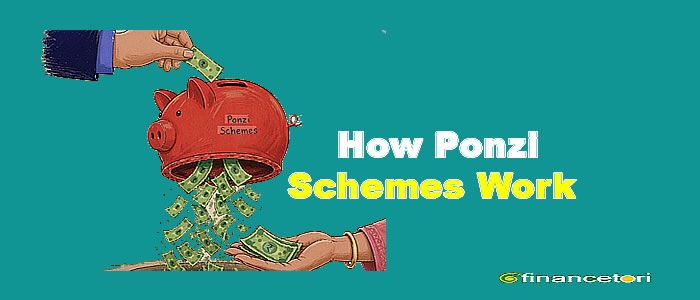
A Ponzi scheme is a type of investment fraud in which money collected from new investors is used to pay earlier investors, instead of the operator generating sufficient legitimate profits from genuine business or investment activities.
The person running the scheme may claim to trade forex, invest in cryptocurrency, finance agriculture, manage digital assets or operate another profitable business. However, the central problem is that the money promised to investors is not supported by enough genuine earnings.
Rather than earning returns through real economic activity, the operator relies on a continuing supply of money from new participants.
The scheme may also use investors' money to pay operating expenses or enrich the person behind it.
The US Securities and Exchange Commission's investor education resource explains that Ponzi operators commonly promise high returns with little or no risk, while using new investors' money to pay existing participants. Investor.gov: Ponzi schemes
What makes it fraudulent?
The problem is not simply that an investment performs poorly. Legitimate investments can lose money because of market conditions, poor management or unexpected events.
A Ponzi scheme involves deception about how returns are generated and how investors' money is being used. The operator misrepresents the arrangement to obtain or retain people's money.
For example, an investor might see a dashboard showing ?350,000 after depositing ?300,000. That displayed balance does not establish that the business has earned ?50,000. Unless the balance represents real, accessible assets supported by genuine earnings, it may be nothing more than a number on a screen.
The important lesson: Do not judge an investment solely by the profits it displays or the payments other participants claim to have received. Investigate the underlying business and verify the operator independently.
2. How Ponzi Schemes Work: A Step-by-Step Explanation
Ponzi schemes often follow a recognisable pattern. Although the details differ, the basic arrangement depends on collecting money from new participants to meet obligations to earlier ones.
Step 1: An attractive investment opportunity is presented
The promoter introduces an opportunity that appears profitable and straightforward. It might be described as an automated trading system, a cryptocurrency investment, a farming project or a private investment fund.
The promoter may use technical language, professional graphics, business documents and impressive financial projections to create an appearance of credibility.
Step 2: Investors are promised unusually high returns
The offer may promise daily, weekly or monthly income, sometimes suggesting that profits are guaranteed regardless of market conditions.
For example, a promoter might claim that investing ?100,000 will produce ?20,000 every month without meaningful risk.
An unusually high return is not, by itself, proof of fraud. However, claims of consistently high profits with little or no risk deserve careful scrutiny. Every genuine investment carries some form of risk, even if that risk is not always obvious.
Step 3: The first participants contribute money
People transfer funds into an account or payment channel designated by the promoter. They may receive a receipt, contract, account dashboard or membership confirmation.
These materials can make the arrangement look formal, but documentation alone does not prove that a real investment exists.
Step 4: Money from new participants is used to pay earlier participants
Instead of generating sufficient profit from genuine activities, the operator uses incoming funds to meet promised payments.
This creates the appearance that the investment is working. Earlier investors may believe they are receiving profits, even though their payments are funded by other people's deposits.
Step 5: Early payments build confidence
Some participants receive the money they were promised. They may conclude that the investment is legitimate and tell their friends or colleagues about it.
Others may reinvest the payments rather than withdraw them, leaving more money under the operator's control.
Receiving an early payment does not prove that an investment is genuine. In a Ponzi scheme, early payments can be part of the mechanism that sustains the deception.
Step 6: More people join
New participants may be attracted by personal recommendations, online testimonials or visible celebrations of supposed success.
Some schemes also offer referral bonuses. Although not every referral programme is fraudulent, recruitment incentives become concerning when the business cannot explain a sustainable source of revenue independent of new participants' money.
Step 7: The operator struggles to meet its obligations
As the scheme grows, the amount owed to participants may increase faster than the money coming in.
The operator may continue making misleading claims about profits or account balances to discourage withdrawals and maintain confidence.
Step 8: Payments slow down or stop
When new deposits decline or many participants request withdrawals, the operator may not have enough money to pay everyone.
Investors may encounter excuses about technical problems, compliance reviews, taxes or temporary account restrictions. Eventually, the scheme may collapse, and the operator may disappear or become unreachable.
A simple numerical example
The following figures are illustrative only. They describe a fictional arrangement and are not evidence about any real company or investment.
|
Stage |
What happens |
Illustrative amount |
|
1 |
Ten people each deposit ?100,000 |
?1,000,000 collected |
|
2 |
The operator promises each person a 10% return |
?100,000 promised in total |
|
3 |
Five new people each deposit ?100,000 |
?500,000 additional funds |
|
4 |
The operator pays the first group ?100,000 in supposed returns |
Money is paid from incoming funds |
|
5 |
More participants request their original capital and profits |
Withdrawal demands grow |
The example does not account for every possible payment or expense. Its purpose is to demonstrate the central weakness: if sufficient genuine profits are not being generated, the operator must keep finding new money to meet existing obligations.
The more the scheme promises to pay, the more difficult it becomes to maintain without real earnings.
3. Why Ponzi Schemes Appear to Work at First
One of the most dangerous features of a Ponzi scheme is that it may initially appear successful. People are often more likely to trust something when they see others receiving money.
Several factors contribute to this false confidence.
Early payouts
A participant who receives a payment may believe the promoter has fulfilled the investment agreement. That person may not realise that the payment could have come from other investors' deposits.
Fake account balances and performance reports
An online dashboard can display deposits, profits and withdrawal confirmations without proving that the underlying assets exist.
Screenshots and account statements can also be manipulated. Investors should seek independent verification rather than relying entirely on documents supplied by a promoter.
Testimonials and social proof
A friend, relative, colleague, religious-community member or online influencer may recommend the opportunity. Because the recommendation comes from someone familiar, the investment may feel safer.
However, the person recommending it might also have been deceived. They may have received an early payment without understanding where the money originated.
Reinvestment pressure
Promoters may encourage participants to leave their money in the scheme to earn larger returns. The displayed balance may increase while the amount investors can actually withdraw remains uncertain.
Fear of missing out
When people hear that others are making money, they may fear losing a rare opportunity. This emotional pressure can discourage them from investigating the risks.
Remember: A successful withdrawal, a persuasive testimonial or a professional-looking website is not proof that an investment is legitimate. Look for verifiable business activity, appropriate regulatory authorisation and transparent financial information.
4. Common Techniques Used by Ponzi Scheme Operators
Recognising common manipulation tactics can help you identify suspicious investment offers before committing your money.
- Unusually high or guaranteed returns: Promoters may suggest that investors can earn substantial profits consistently without meaningful risk.
- Vague explanations of profit generation: They may use terms such as artificial intelligence, forex algorithms, cryptocurrency arbitrage or agricultural technology without providing evidence of a viable business model.
- Urgency and pressure: Messages such as “last chance to join” or “the offer closes tonight” can discourage independent research.
- Misleading regulatory claims: A promoter may display a logo, certificate or registration number that is irrelevant, false or associated with a different business.
- Referral incentives: Investors may be encouraged to recruit friends and family, creating a chain of new deposits.
- Unverified endorsements: Testimonials, celebrity images or influencer promotions may be presented without evidence that the endorsement is genuine or that the investment has been independently assessed.
- Withdrawal delays: Investors may be told that withdrawals are temporarily unavailable or that they must wait for a new investment cycle.
- Unexpected release fees: A promoter may demand additional payments before releasing supposed profits or account balances. Requests for advance payments to unlock funds are a serious warning sign.
These indicators do not individually establish that a particular person or company has committed fraud. However, several appearing together should prompt you to stop, investigate and avoid sending more money until the situation is independently verified.
5. Ponzi Schemes in Nigeria: What Investors Should Watch For
Investment fraud can take many forms. In Nigeria, a suspicious offer might arrive through a WhatsApp group, a Telegram channel, a Facebook advert, a personal message or a recommendation from someone you know.
Consider these hypothetical examples.
Example 1: An automated forex trading platform
A platform claims its software trades foreign exchange automatically and produces a fixed monthly profit. However, it provides no independently verifiable trading records, offers little explanation of its strategy and promises that investors cannot lose money.
The combination of guaranteed profits, unclear trading activity and unverifiable evidence should raise concerns.
Example 2: A cryptocurrency investment group
A Telegram administrator promises to double participants' money within a short period. Members post screenshots of profits, but nobody can independently establish whether the displayed balances represent real cryptocurrency holdings.
Screenshots are not proof of ownership, successful trading or the ability to withdraw funds.
Example 3: An agricultural investment offer
A promoter invites people to invest in a supposed large-scale farming project, promising regular profits from crop production. The promoter cannot provide convincing evidence of the farms, production, sales, costs or the contractual rights of investors.
Agricultural businesses can be legitimate, but investors should verify the underlying operation rather than relying on attractive projections.
Example 4: A digital investment programme with referral bonuses
Participants are encouraged to deposit money and invite several other people to qualify for additional rewards. The promoter cannot explain how the business generates enough genuine revenue to cover these payments.
Referral bonuses do not automatically make a business fraudulent. However, if the programme depends heavily on fresh deposits rather than real sales or productive activity, it deserves serious scrutiny.
The role of Nigerian regulators and enforcement agencies
Different institutions have different responsibilities. Knowing which one to approach can help you verify an offer or report suspected misconduct.
- Securities and Exchange Commission Nigeria (SEC): The key regulator to consult when checking operators and products within Nigeria's capital market. Its official resources explain Ponzi and pyramid schemes and allow investors to check registered operators. SEC investor FAQs
- Central Bank of Nigeria (CBN): Responsible for important aspects of monetary and banking regulation. It also provides complaint procedures for financial institutions within its regulatory remit. A complaint about a bank is different from a report about an unrelated investment promoter. CBN complaints guidance
- Economic and Financial Crimes Commission (EFCC): An enforcement agency that investigates economic and financial crimes. Its official FAQ describes petition channels, including in-person submissions and email. EFCC official FAQ
- Corporate Affairs Commission (CAC): Provides company registration information and a public search facility. This helps establish whether an entity is registered, but incorporation is not proof that an investment is safe or authorised. CAC public search
Always verify the specific product, activity and authorisation required. Do not assume that registration with one institution automatically authorises every financial service.
6. Ponzi Schemes vs Pyramid Schemes vs Legitimate Investments
Ponzi schemes and pyramid schemes are related forms of fraud, but they are not identical. Both can depend on money from new participants, although their structures and recruitment practices may differ.
|
Feature |
Ponzi scheme |
Pyramid scheme |
Legitimate investment |
|
Source of money |
New investors' funds may pay earlier investors |
New participants' payments or recruitment fees may fund earlier participants' rewards |
Returns are expected from genuine assets, business earnings or market performance |
|
Role of new participants |
Needed to sustain payouts when genuine earnings are insufficient |
Recruitment is usually central to the model |
New investors are not inherently required to pay existing investors' returns |
|
Recruitment |
May be encouraged but is not always essential to the presentation |
Usually a central feature |
Referrals may occur, but the investment should have an independently viable economic basis |
|
Transparency |
Often involves deceptive or unverifiable financial claims |
Often lacks a sustainable model independent of recruitment |
Should provide relevant disclosures, terms and information appropriate to the product |
|
Sustainability |
Usually collapses when new money is insufficient |
Unsustainable as recruitment growth eventually reaches its limits |
Depends on the asset, business, costs, risks and market conditions |
|
Warning signs |
Unrealistic returns, misleading statements, withdrawal problems |
Heavy recruitment pressure, rewards tied mainly to bringing in new members |
Excessive or unclear fees, inadequate disclosure or unauthorised activity are warning signs |
A legitimate multi-level marketing (MLM) business is not automatically a pyramid scheme. Its actual structure matters, including whether genuine products or services are sold to real customers and whether compensation depends primarily on recruitment.
Likewise, a business selling a real product is not automatically a sound investment. You must still evaluate its financial model, the risks and the terms under which your money is being committed.
For additional background, see the US Securities and Exchange Commission's explanations of Ponzi schemes and pyramid schemes.
7. Why Ponzi Schemes Eventually Collapse
A Ponzi scheme cannot continue indefinitely if it does not generate enough genuine earnings to meet its obligations. It relies on money arriving from new participants, and that money is limited.
Growing payment obligations
As the number of participants increases, the total amount the operator claims to owe may also rise. The operator must find enough new money to meet withdrawals and promised returns.
Slowing recruitment
Eventually, attracting enough new participants becomes difficult. A community may become saturated, potential investors may grow cautious, or negative reports may discourage new deposits.
Mass withdrawal requests
If many participants attempt to withdraw at once, the operator may not have enough readily available money to pay them. This can expose the underlying weakness of the arrangement.
Loss of confidence
News of missed payments or regulatory warnings can prompt investors to request their money. As confidence falls, fewer people may be willing to deposit fresh funds.
Shutdown or disappearance
The operator may stop responding, close the website, suspend withdrawals or announce a supposed restructuring. In other cases, the scheme may operate for a period while payment problems gradually worsen.
When a Ponzi scheme collapses, some participants may recover part of their money, but others may lose their entire investment. Recovery depends on the circumstances, available assets, investigations and legal processes; it cannot be guaranteed.
8. Ponzi Scheme Warning Signs Every Investor Should Recognise
Before investing, use this checklist to examine the opportunity.
Investment safety checklist
Tick any warning signs you have noticed in an investment offer.
Returns appear unusually high compared with the risks involved.
The promoter claims profits are guaranteed or that losses are impossible.
The business cannot explain clearly how it generates returns.
The investment operator or product's regulatory status cannot be verified.
You are pressured to invest immediately or keep the opportunity secret.
You are strongly encouraged to recruit others to earn rewards.
Financial statements, trading records or business activity cannot be independently verified.
Withdrawals are delayed without a clear and credible explanation.
You are asked to pay additional money to release supposed profits or withdraw your own funds.
The promoter relies mainly on testimonials, screenshots or social media popularity.
No items selected. Review each warning sign carefully before making a decision.
One warning sign does not automatically prove fraud. Nevertheless, multiple warning signs—especially unrealistic guarantees, unverifiable business activity and withdrawal problems—are reasons to pause and investigate.
9. How to Verify an Investment Company in Nigeria
Searching online or asking friends about an investment is not enough. Carry out independent checks before transferring money.
Step 1: Identify the exact company and product
Obtain the company's full legal name, registration number, official website and the precise name of the investment product. Ask who will hold your money, what rights you receive and how returns are expected to be generated.
Be cautious if the promoter uses several names or cannot explain which legal entity is responsible for the investment.
Step 2: Check the SEC's official register where applicable
Visit the SEC Nigeria registered operator directory. Search for the operator and confirm the relevant registration status and permitted functions.
Do not rely solely on a screenshot of a certificate supplied by a promoter. Use the regulator's own website and contact the SEC independently if the information is unclear.
A company might be registered for one activity but not authorised to provide the investment service being offered. Verify the specific activity, not just the company name.
Step 3: Check the company through CAC
Use the CAC public search portal to look up the company or business name.
Confirm that its details are consistent with the information supplied by the promoter.
Important: CAC incorporation shows that an entity has been registered; it does not establish that its investment promises are genuine, that it is financially sound or that it has every required financial authorisation.
Step 4: Understand the business model
Ask practical questions:
- What activity generates the expected return?
- What assets or services support the business?
- What costs, market risks and possible losses are involved?
- Who independently verifies its financial performance?
- Where are the funds held, and what legal rights do investors have?
- What are the withdrawal conditions, fees and restrictions?
If the answers are vague, contradictory or impossible to verify, do not rely on the promoter's assurances.
Step 5: Check for official warnings and credible complaints
Search official regulator websites for public notices or warnings about the company, its product and its promoters. Look for independently verifiable information rather than relying exclusively on online reviews.
A lack of warnings does not prove that an opportunity is legitimate. A scheme may not yet have been investigated or publicly identified.
Step 6: Verify contact details independently
Use contact details published through the regulator's official website, rather than phone numbers or email addresses provided only by the promoter. This reduces the risk of relying on a fake identity or impersonated regulator.
Step 7: Take time to decide
Do not invest because someone claims an offer will disappear in a few hours. A genuine opportunity should withstand reasonable questions and independent checks.
If you do not understand the investment or cannot afford the potential loss, it is sensible to step back and seek independent professional guidance.
10. What to Do If You Have Already Invested in a Suspected Ponzi Scheme
Discovering that an investment may be fraudulent can be distressing, especially if you used savings intended for school fees, rent, business expenses or family responsibilities. Avoid blaming yourself. Focus on protecting what remains and preserving evidence.
Follow these steps.
1. Stop sending additional money. Do not pay new deposits, upgrade fees or supposed account-release charges until you have independently assessed the situation.
2. Preserve all evidence. Keep transaction receipts, bank statements, payment references, contracts, emails, chat messages, telephone numbers, website addresses and screenshots of account balances or withdrawal requests. Store copies securely.
3. Contact your bank or payment provider promptly. Explain that you suspect fraud and ask whether the transaction can be traced, disputed, stopped or otherwise addressed. The available options depend on the payment method, timing and circumstances. Do not assume a transfer can be reversed.
4. Report the suspected fraud. You can submit a factual report to the EFCC through its official reporting channels. If the matter concerns an investment or suspected capital-market violation, contact the SEC Nigeria as well. Provide the evidence you have collected.
5. Use the appropriate complaint channel. If your complaint concerns a bank or another financial institution regulated by the CBN, first follow that institution's complaint process. If it remains unresolved within the applicable period, consult the CBN's complaint guidance for escalation.
6. Protect other people without making unsupported accusations. If friends or relatives are involved, share verifiable facts and encourage them to preserve evidence and seek official guidance. Avoid publishing unverified claims about individuals or businesses.
7. Watch out for recovery scams. After losing money, you may be contacted by someone claiming to be a recovery agent, lawyer or official who can guarantee a refund for an upfront fee. Verify any professional or agency independently. Do not provide passwords, PINs or one-time verification codes.
Reporting quickly may help the relevant institutions assess the situation, but it does not guarantee that your money will be recovered. Do not risk further funds chasing a promised refund.
11. How to Protect Yourself and Your Family
Financial fraud prevention begins before you invest. A few consistent habits can help you make more informed decisions.
- Investigate before investing. Verify the company, product, relevant regulatory status and claims independently.
- Understand where returns come from. A credible investment should have an understandable economic basis, even when the strategy is complex.
- Consider the downside. Ask what could go wrong, how much you could lose and whether you could manage that loss.
- Avoid borrowing for suspicious opportunities. Borrowing to invest can compound the damage if the investment fails.
- Do not make decisions under pressure. Urgency, fear of missing out and emotional appeals should not replace due diligence.
- Seek independent advice. Where necessary, consult a suitably qualified professional who is not being paid by the promoter to recruit you.
- Discuss financial safety with family members. Explain why early payouts, testimonials and social media popularity do not prove legitimacy.
- Keep records. Retain contracts, statements, receipts and correspondence for legitimate investments.
- Use official information. Consult regulators' websites rather than relying only on WhatsApp messages, referral links or promotional material.
- Be careful with trusted recommendations. A friend or relative may genuinely believe in an opportunity and still be mistaken.
A useful rule is to never invest money you cannot afford to lose in an opportunity you do not understand. This is not a substitute for proper verification, but it encourages you to consider the consequences before committing your funds.
12. Frequently Asked Questions About Ponzi Schemes
1. Can you make money from a Ponzi scheme?
Some early participants may receive payments and appear to make money. Those payments may come from newer investors' deposits rather than genuine profits. Some early participants may withdraw funds successfully, while many later participants lose money. An early payout does not establish that the scheme is legitimate.
2. Why do early investors sometimes receive their money?
A Ponzi scheme uses money collected from newer participants to pay some earlier participants. These payments create confidence and can encourage people to reinvest or recommend the opportunity to others. The money received is not necessarily evidence of genuine investment earnings.
3. Is every high-return investment a Ponzi scheme?
No. Some legitimate investments have the potential to generate high returns, but they generally involve corresponding risks, and actual performance is uncertain. The key questions are whether the returns are supported by genuine economic activity, whether the claims are truthful and whether the operator is appropriately authorised.
4. How is a Ponzi scheme different from a pyramid scheme?
A Ponzi scheme typically presents itself as an investment managed by an operator who uses new participants' money to pay earlier participants. A pyramid scheme generally relies more directly on recruiting new members and using their payments to reward participants higher up the structure. Both can be fraudulent and unsustainable, but their structures differ.
5. Can a registered company operate a fraudulent investment?
Company registration does not guarantee honesty, financial stability or investment authorisation. A registered company can still make misleading claims or engage in wrongdoing. Investors should check the relevant financial regulator, the specific investment activity and the actual business model.
6. How can I check whether an investment platform is legitimate in Nigeria?
Start by identifying the exact company and product. Check the SEC Nigeria registered operator directory where relevant, and search the CAC public register. Confirm the specific activity the operator is authorised to conduct, examine the terms and risks, and seek independent confirmation of its claims. No single registration check proves that an investment is safe.
7. How can I report investment fraud in Nigeria?
Preserve your evidence and contact the relevant authorities. The EFCC is a channel for reporting suspected economic and financial crimes. The SEC Nigeria is relevant to suspected securities and capital-market violations. If a regulated bank or other CBN-regulated financial institution is involved, follow the appropriate complaint process. Choose the channel that matches the issue and use official contact details.
8. Can victims recover money lost in a Ponzi scheme?
Recovery may be possible in some cases, depending on the available assets, transaction records, investigations and legal proceedings. However, recovery is not guaranteed, and victims may receive only part of their money or nothing at all. Be cautious of anyone promising a guaranteed refund for an upfront payment.
9. What should I do if someone I trust recommends a suspicious investment?
Thank them for sharing the opportunity, but verify it independently before committing money. Ask how the business generates returns and check its relevant regulatory status. Do not assume the person has verified the investment simply because they have received payments or are enthusiastic about it.
10. Are cryptocurrency, forex and agricultural investments automatically Ponzi schemes?
No. Cryptocurrency, forex trading and agriculture are not inherently Ponzi schemes. The concern is whether a particular offer misrepresents its activities, uses new investors' funds to pay existing participants or makes unsupported promises. Investigate the specific operator, product, risks and source of returns.
11. What if an investment platform suddenly stops withdrawals?
Do not send more money to unlock your balance. Preserve all records, contact your bank or payment provider, and report the suspected problem to the relevant authorities. A withdrawal delay does not alone prove that a scheme is fraudulent, but unexplained restrictions combined with other warning signs warrant serious concern.
12. Does a guaranteed return mean an investment is a Ponzi scheme?
Not necessarily, because some financial products may offer contractually defined payments under particular conditions. However, a promise of high, risk-free returns is a significant warning sign. Check the product's legal structure, the issuer's obligations, the risks, any guarantees and the relevant regulatory authorisation. Never rely solely on a promoter's use of the word “guaranteed”.
Conclusion: Investigate Before You Invest Ponzi schemes can appear convincing because they imitate legitimate investment businesses. They may use professional websites, persuasive promoters, attractive account dashboards and early payouts to gain trust. Yet the underlying arrangement cannot remain sustainable if it depends on new investors' money rather than sufficient genuine earnings. Learning how Ponzi schemes work is an important step towards protecting your savings. Before committing money, investigate the operator, understand the business model, check the relevant regulatory status and be sceptical of promises that combine high returns with little or no risk.
If you suspect fraud, stop sending money, preserve evidence and report the matter through appropriate official channels. Do not let embarrassment or fear prevent you from seeking help.
Share this article with your friends, family members and colleagues. A conversation about investment safety today could help someone avoid a serious financial loss tomorrow. For more practical guides on money management, investment verification, financial literacy and fraud prevention, explore FinanceTori.