
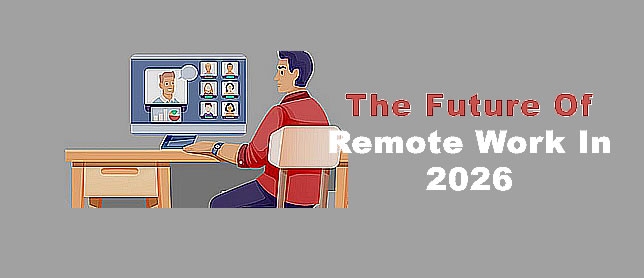
Remote work has transformed from a temporary solution into a permanent feature of the modern workplace. What began as an emergency response during global disruptions in the early 2020s has evolved into a powerful shift in how businesses operate, hire talent, and measure productivity. In 2026, remote work is expected to become even more sophisticated, flexible, and technology-driven.
Today, millions of professionals are searching for remote jobs, work from home jobs, and fully remote jobs that offer flexibility and better work-life balance. Businesses across industries are redesigning their operations to support distributed teams, while employees increasingly value autonomy and digital freedom.
Advances in Artificial Intelligence (AI), cloud computing, automation, and digital collaboration tools are accelerating this transition and reshaping traditional office culture. As a result, opportunities such as remote customer service jobs, virtual assistant jobs remote, remote accounting jobs, remote IT jobs, remote project manager jobs, and remote healthcare jobs are becoming increasingly common across global industries.
However, the future of remote work is not without challenges. Businesses must address cybersecurity risks, employee wellbeing concerns, communication barriers, and the complexities of managing international remote teams. At the same time, workers must continue developing digital skills to remain competitive in a rapidly changing employment landscape.
This article explores the future of remote work in 2026, examining emerging trends, opportunities, challenges, technological innovations, and what both employees and employers should expect in the years ahead.
Understanding Remote Work
Remote work refers to a working arrangement where employees perform their duties outside a traditional office environment using digital communication technologies and internet-based tools. Workers may operate from home, co-working spaces, cafes, or even different countries.
Remote work can take several forms, including:
- Fully remote jobs
- Hybrid work arrangements
- Freelance and contract-based remote careers
- Digital nomad lifestyles
- Flexible work schedules
- Part time remote jobs
- Online work from home opportunities
In 2026, remote work is no longer viewed simply as an employee benefit. Instead, it is becoming a strategic business model that enables organisations to access global talent, reduce operational costs, and improve workforce flexibility.
The rise of work from anywhere jobs has also created opportunities for students, parents, freelancers, and professionals looking for legitimate work from home jobs and online jobs work from home no experience.
The Evolution of Remote Work
Early Remote Work Models
Before widespread digital transformation, remote work was relatively uncommon and mostly limited to freelancers, consultants, and certain technology roles. Many organisations believed productivity depended heavily on physical office presence.
However, improvements in internet connectivity, cloud software, and collaboration platforms gradually made remote operations more practical.
The Global Shift Towards Flexible Work
The major turning point came during the early 2020s, when businesses worldwide rapidly adopted remote working systems. Companies invested heavily in video conferencing tools, cloud storage, cybersecurity infrastructure, and virtual collaboration platforms.
As organisations adapted, many discovered several benefits:
- Reduced office expenses
- Increased employee flexibility
- Access to wider talent pools
- Improved productivity in certain roles
- Greater employee satisfaction
In 2026, remote work has evolved into a more mature and structured system supported by advanced technologies and improved management practices.
Today, companies hiring remote workers are no longer limited to technology firms alone. Businesses in finance, healthcare, customer service, education, and digital marketing now actively recruit remote employees worldwide.
- Key Remote Work Trends in 2026
- Hybrid Work Becomes the Dominant Model
One of the strongest workplace trends in 2026 is the rise of hybrid work environments. Many businesses now combine remote and office-based work instead of choosing one exclusively.
Employees may spend:
- Two or three days working remotely
- Remaining days collaborating in physical offices
- Hybrid models offer several advantages.
Benefits for Employers
- Reduced office space costs
- Improved employee retention
- Better workforce flexibility
- Benefits for Employees
- Improved work-life balance
- Reduced commuting stress
- Greater autonomy
Companies are redesigning offices into collaboration hubs rather than permanent daily workspaces.
Artificial Intelligence Shapes Daily Work
Artificial Intelligence is playing a major role in the future of remote work. AI tools are helping employees automate repetitive tasks, manage schedules, analyse data, and improve communication.
Common AI applications in 2026 include:
- AI meeting assistants that summarise discussions
- Automated scheduling systems
- Smart customer support chatbots
- AI-driven productivity tracking
- Real-time language translation tools
- Virtual writing and research assistants
AI is also improving opportunities for remote customer service jobs, remote data entry jobs, remote bookkeeping jobs, and remote sales jobs by streamlining repetitive administrative tasks.
AI is not replacing most remote workers entirely. Instead, it is improving efficiency and allowing workers to focus on creative, strategic, and problem-solving tasks.
Global Hiring Expands Rapidly
Remote work is removing geographical barriers to employment. By 2026, companies increasingly hire workers from different countries rather than limiting recruitment to local markets.
This trend creates opportunities for:
- Skilled professionals in developing countries
- Freelancers and contractors
- International collaborations
- Small businesses seeking affordable talent
- Entry level remote jobs seekers
- Remote jobs worldwide applicants
Global hiring also allows organisations to operate around the clock using distributed teams across multiple time zones.
As international hiring expands, more professionals are searching for remote work from home jobs, online remote jobs, and work from home jobs hiring immediately.
Technologies Driving the Future Workplace
Advanced Collaboration Tools
Collaboration software continues to evolve rapidly in 2026. Remote teams rely heavily on digital platforms that support communication, project management, and teamwork.
Popular workplace technologies include:
- Video conferencing platforms
- Cloud-based project management tools
- Digital whiteboards
- Team messaging applications
- Virtual office environments
Many platforms now integrate AI-powered features that improve workflow efficiency and reduce administrative tasks.
Virtual and Augmented Reality Workspaces
Some organisations are experimenting with virtual reality (VR) and augmented reality (AR) technologies for meetings, training, and collaboration.
Employees may attend immersive virtual meetings using digital avatars, creating more engaging interactions compared to traditional video calls.
Although VR workplaces are still developing, they may become more common in industries requiring visual collaboration, design work, and advanced simulations.
Cloud Computing and Automation
Cloud computing remains essential to remote work infrastructure. Businesses rely on cloud services for:
- File storage
- Data access
- Software applications
- Team collaboration
- Remote system management
Automation tools also reduce manual work by handling repetitive business processes such as invoicing, reporting, scheduling, and customer service.
This technological growth is creating more opportunities for remote travel agent jobs, transcription jobs from home, customer service jobs from home, and remote teaching jobs.
Cybersecurity and Data Protection Challenges
As remote work expands, cybersecurity becomes increasingly important.
Employees working from different locations create additional security risks, including:
- Data breaches
- Phishing attacks
- Weak home network security
- Device theft
- Unsecured file sharing
In 2026, organisations are investing heavily in cybersecurity systems and employee training programmes.
Common security measures include:
- Multi-factor authentication
- Encrypted communication tools
- VPN usage
- Secure cloud storage
- Cybersecurity awareness training
- AI-powered threat detection systems
Companies that fail to prioritise cybersecurity may face financial losses, reputational damage, and legal consequences.
Conclusion: The future of remote work in 2026 represents a major transformation in how people live, work, and collaborate. Remote and hybrid work models are becoming deeply integrated into modern business operations, supported by advances in Artificial Intelligence, cloud computing, automation, and digital communication technologies.
Whether individuals are searching for high paying remote jobs, part time online jobs from home, remote careers, or easy work from home jobs, the digital workplace continues to expand rapidly across industries.
While remote work offers significant advantages — including flexibility, global hiring opportunities, reduced costs, and improved work-life balance — it also presents challenges related to cybersecurity, employee wellbeing, communication, and organisational culture.
The most successful businesses and professionals will be those who remain adaptable, continuously develop digital skills, and embrace innovation responsibly. Remote work is unlikely to disappear after 2026. Instead, it is expected to continue evolving as technology advances and workforce expectations change. Ultimately, the future workplace will not simply be defined by physical location, but by flexibility, connectivity, collaboration, and the ability to thrive in an increasingly digital world.






 ECOWAS Grant 2026: How to Apply, Eligibility, Requirements and Business Sectors
  How to Buy SoFi Stocks
  Top MBA Specializations In Demand